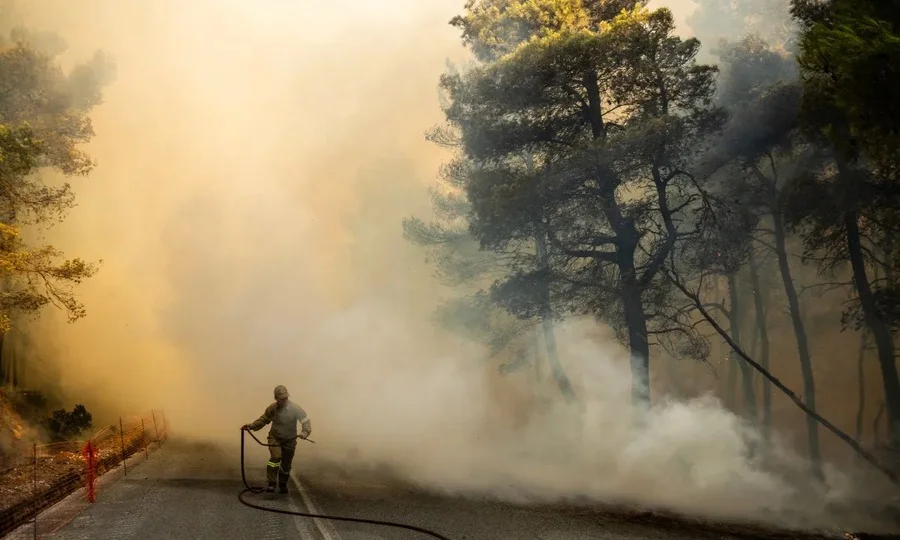
The EU climate policy agenda is set for a prominent return this month. European Commission President Ursula von der Leyen will address the issue in her key annual policy speech. This renewed focus follows a summer marked by brutal heatwaves across the continent.
Critics suggest the last two years saw significant environmental rollbacks. However, Europe’s recent sweltering temperatures make climate action impossible to ignore. Scientists confirm that recurring heatwaves are a clear sign of global warming. Furthermore, these events are primarily caused by burning fossil fuels. Experts warn they will become more frequent, longer, and more intense.
Climate concerns once led the EU agenda. Nevertheless, they have recently yielded to defense and industry goals. This shift deeply frustrates environmental advocates. The bloc notably weakened new green business regulations. It also proposed dropping a 2035 ban on new internal combustion engine car sales.
Some observers hope von der Leyen’s September 16 speech could signal a rebalancing of Brussels’ priorities. For example, about 200 environmental groups wrote to her in August. They urged her to outline concrete plans for phasing out fossil fuels across the 27-nation bloc. Moreover, EU commissioners will meet Swedish climatologist Johan Rockstrom for a seminar on Friday.
Yet, conflicting signals emerge. Sources within the EU indicate von der Leyen may emphasize “climate resilience.” She could also highlight the economic potential of green industries. These areas are often seen as easier to address. Legislation on climate resilience was already anticipated this year. Likewise, promoting green industry has been a familiar theme throughout her seven-year tenure.
Ambitious legislation, like the initial “Green Deal,” now faces an uphill battle. Green parties performed poorly in the 2024 European elections. The business-friendly centre-right bloc now dominates the European Parliament. Climate sceptics on the far-right also gained influence.
Right-wing lawmaker Celine Imart stated the priority is not to “repaint in green laws.” Divisions also exist within the Commission itself. Recently, green voices clashed with pro-business colleagues. Their disagreement concerned carbon market reforms impacting aviation and maritime transport. Furthermore, EU countries are debating how to allocate limited long-term budget resources.
Green leader Terry Reintke called the situation an “uphill battle.” Her group intends to push “very, very hard” for concrete climate actions in the speech. She emphasized the “existential situations” at stake. Therefore, the path forward for comprehensive EU climate policy remains challenging.